|
Tourism
Education in the UK: Lesson Drawing in Educational Policy
RIVANDA MEIRA TEIXEIRA* - TOM BAUM**
Federal University of Sergipe
University of Strathclyde
ABSTRACT
Tourism
education is fast growing across most tourism receiving countries in the
developed and developing world. Traditions in this area have seen models
of tourism education transplanted from, generally, a developed country
context to that of countries in varying stages of development, frequently
in an uncritical and unplanned manner. This paper aims to provide a framework
whereby the best of a national case study in tourism education (here based
on the UK) can be translated in a critical and sensitive manner, elsewhere
The context of the research upon which this paper reports was a trans-national
study which aimed to draw lessons from the UK experience for application
elsewhere. The paper is based on a field study of tourism education in
the UK and reports the findings in a manner that can have transfer value
elsewhere. The paper concludes with a number of key questions that can
be extrapolated to other contexts from the process of lesson drawing.
Keywords:
tourism education, education policy, lesson drawing, UK.
Designing a Model for the Development of a Theme
Park in Côa Valley, Portugal
CASSIANO PAIS* - CARLOS COSTA** - ANTONIA FERNANDES***
University of Aveiro
ABSTRACT
The
purpose of this study was to design a model for the development of a prototype
theme park to be located at the site of open-space rock art engravings
recently founded in the Côa valley, northern Portugal. An original stage
model was used as premises for the research procedure. Three parts of
the model were thoroughly probed: a) identification of the need for the
development of a prototype theme park through assessment of the interest
of the visitors of Côa Valley Archaeological Park (PAVC) in the project;
b) evaluate present facilities in the area; c) development of plans for
establishing a Palaeolithic space-oriented theme park in Côa valley. In
order to investigate parts a) and b) of the model a Visitors' Attitude
Survey of the population was applied to 1,400 visitors of the PAVC, major
tourist destiny of the region. Eighty percent of them were returned. Findings
demonstrated a very positive interest of the visiting population in developing
the project. Mainly, part c) of the model was investigated through the
feasibility study based upon external variables of planning.
Keywords:
tourism planning, tourism development, theme parks, Portugal.
A Framework for a National Tourism Information
System of Turkey
BIRGUL EGELÝ* - MELTEM ÖZTURAN**
*Bogazici University
**Bogazici University
ABSTRACT
Throughout
the world, information plays an important role in decision-making, as
well as problem solving in business. Information systems are widely used
for collection and dissemination of information. Due to the complex set
of interrelationships between people, places and products that information
involves, tourism is one of the areas in which technology-based information
systems are commonly used. Turkey has a great potential in tourism industry.
However, she has problems in collecting and disseminating tourism information.
A research project has been activated to explore the existing tourism
information, computer infrastructure and tourism information needs of
Turkish tourism organizations. Furthermore, it is also aimed to gain insights
into the preferences for the organizational aspects of a national tourism
information system. As a result of this research, an organizational model
for development and management of a National Tourism Information System
for Turkey is proposed.
Keywords:
tourism, information, information system, Turkey.
Restaurant Tipping by Tourists in Hong Kong
B.W.A. (BEN) DEWALD
Hong Kong Polytechnic University
ABSTRACT
This
article revisits the topic of international differences in restaurant
tipping. Taking a different approach, this study examines the tipping
habits of tourists from seven distinct countries, four Asian and three
Western, while in Hong Kong. Restaurant tipping is a sensitive topic,
especially in Asia, where breaches of social convention are taken more
personally than they would be in the West. Tipping practices are widespread
and rewarding good service without causing anyone to "lose face"
can be difficult. Tipping is not a Chinese custom but with Western influence
came the practice of tipping. Though there is a ten-percent service gratuity
added to most restaurant bills, tips are still expected. This study shows
that there are significant adaptations to local tipping habits. North
American tourists reduced their usual tip by 50 percent when in Hong Kong
restaurants, whereas Asian visitors increased their tips. Australian tourists
tipped similarly at home and abroad. Service was mentioned by the Americans,
Australians, Canadians, Malaysians and Singaporeans as the main reason
for increasing tips, but only 50 percent of the Taiwanese and 45 percent
of the Mainland Chinese chose service as the reason to tip more. The server's
attitude was chosen as the main reason by 75 percent of the Taiwanese,
20 percent of the Mainland Chinese, and between 5 and 10 percent of each
of the other nationalities.
Keywords:
restaurant tipping, service charge, customer satisfaction, national culture.
Winter Tourism, Development of Mountainous Areas
and Visitors' Attitudes Towards Landscape Protection
OLGA G. CHRISTOPOULOU* - IOANNIS J. PAPADOPOULOS**
*University of Thessaly
**University Forest of Pertouli
ABSTRACT
The
main objective of this investigation is the evaluation of the demand for
mountain tourism at the Pertouli ski-centre and in the surrounding communities
of the municipality of Aethikes. The research shows that the contribution
of the ski-centre's operation is of significant importance to the development
of the surrounding mountainous area. In addition, an examination the factors
which affect demand for the ski centre over a period of time reveals that
this demand varies according to some factors (income, job), and is stable
according to some other factors (skiing or visiting, distance). The visitors
are willing to contribute to the landscape conservation by making cash
donations and/or active participation in conservation projects.
Keywords:
ainter tourism, ski areas, mountainous region, environmental protection,
and visitors' attitudes.
Trends of Tourism Market for Agro-Tourism
OLGA IAKOVIDOU* - MARIA EMMANOUILIDOU - THEODOROS STAVRAKAS - POLIMACHI
SIMEONIDOU - DIMITRAIOS CHRISOSTOMIDIS
*Aristotelian University of Thessaloniki
ABSTRACT
Contemporary
"quest" trends are defined by a demand for an agro-tourism product
that is not defined to offering bed and breakfast. Agro-tourism product
must be diversified and it must be based on what is demanded from the
visitors of rural areas. The aim of this paper is to identify the features
and motives of potential visitors from Thessaloniki area to the broader
region of Mt. Kerkini, in Central Macedonia, as well as their choice of
activities, as these define their choice of agro-tourism as a form of
alternative tourism. Analysis of data has shown that people who select
agro-tourism are usually young, of a high educational level and high income.
They often prefer "mini breaks" lasting a few days and spread
throughout the year and are prepared to spend relatively high sums of
money on their accommodation. Short breaks and their distribution over
the year make agro-tourism a kind of secondary complementary holiday.
They prefer a structured agro-tourism product, which apart from the main
services - bed and breakfast - it includes leisure activities, as well
as cultural events and activities connected to environment.
Keywords:
agro-tourism, agro-tourist, Greece.
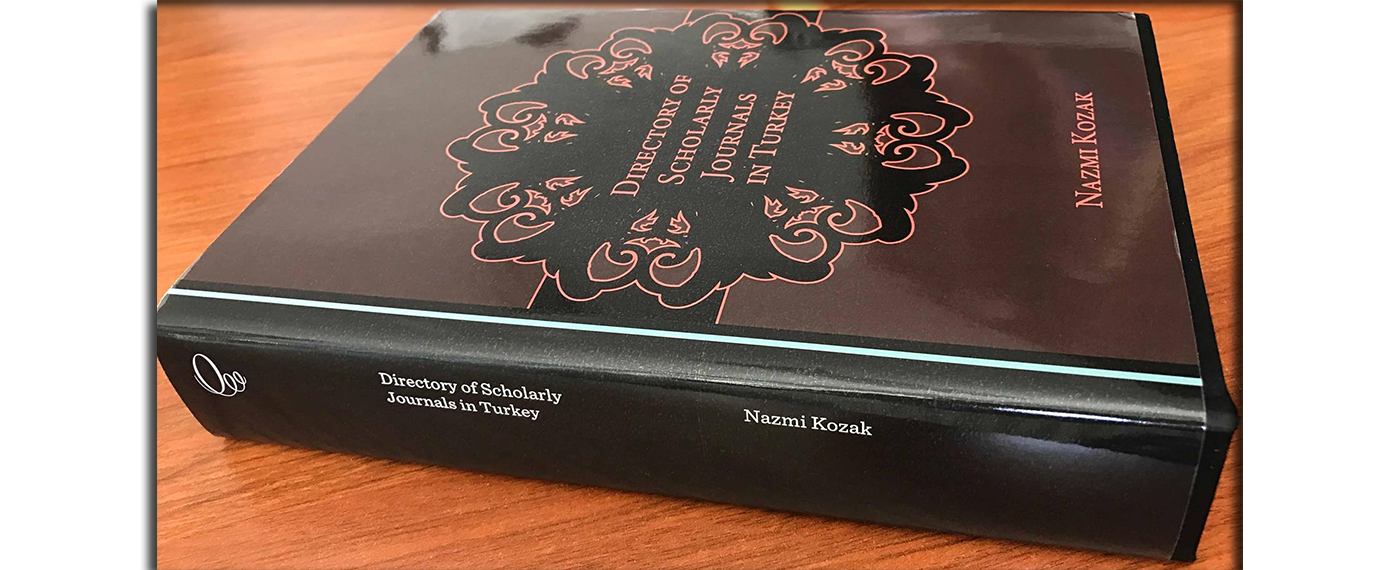
Information on Some International Journals of
Tourism, Leisure and Recreation: The Results of a Survey
HASAN ISIN DENER* - NAZMIKOZAK**
*Hacettepe University
**Anadolu University
ABSTRACT:
In
1998, the editor-in-chief of the present journal, Nazmi Kozak planned
to collect journal information of learned journals of tourism and allied
disciplines, by means of a questionnaire. The data obtained out of 40
responses that were received, was not an adequate sample in order to make
an analytical research of the data -due to various reasons. Today, as
the time has come to realise another survey of the kind, the relevant
results of the previous survey are presented in possible detail.
Keywords:
Tourism journals, journal information, questionnaire survey.
|